Early Life and Roots
I often think of Emilia Kaczorowska as a delicate thread woven into the vast tapestry of Polish history, her life spanning the late 19th and early 20th centuries amid shifting empires and personal trials. Born on March 26, 1884, in Biała, a town now part of Bielsko-Biała in southern Poland, she entered the world as the fifth child in a bustling family of 13 siblings. Some accounts tie her baptism closely to Kraków’s St. Nicholas Church, hinting at early urban influences. Her father, Feliks Paweł Kaczorowski, born in 1849 and passing in 1908, worked as a saddler or upholsterer, crafting leather goods with skilled hands that provided modestly for his large brood. Her mother, Anna Maria Scholz, born in 1853, managed the household until her untimely death in 1897, when Emilia was just 13 years old.
This loss hit hard. Emilia stepped up, helping to care for her younger siblings in a home shadowed by grief. Among her brothers and sisters, seven daughters and six sons in total, many faced short lives; four perished before reaching 30. Known siblings like Olga Marianna, Helena (who went by Augustyna), and Feliks Rudolf Kaczorowski shared in this era of hardship. Feliks Rudolf, for instance, carried on the family name with his own path, though details remain sparse in the echoes of time. Emilia’s childhood unfolded in a Catholic school run by the Sisters of Divine Love, where faith bloomed like spring flowers after a harsh winter. She absorbed lessons in piety and resilience, qualities that would define her.
By her late teens, Emilia pursued education seriously. She trained as a schoolteacher, a role that suited her gentle demeanor. Teaching children in Kraków before marriage, she imparted knowledge with a quiet authority, her elegance noted by those around her. Long hair, pastel dresses, a soft-spoken voice, she embodied the ideal woman of her time, feminine and refined, yet grounded in devotion.
Marriage and Family Bonds
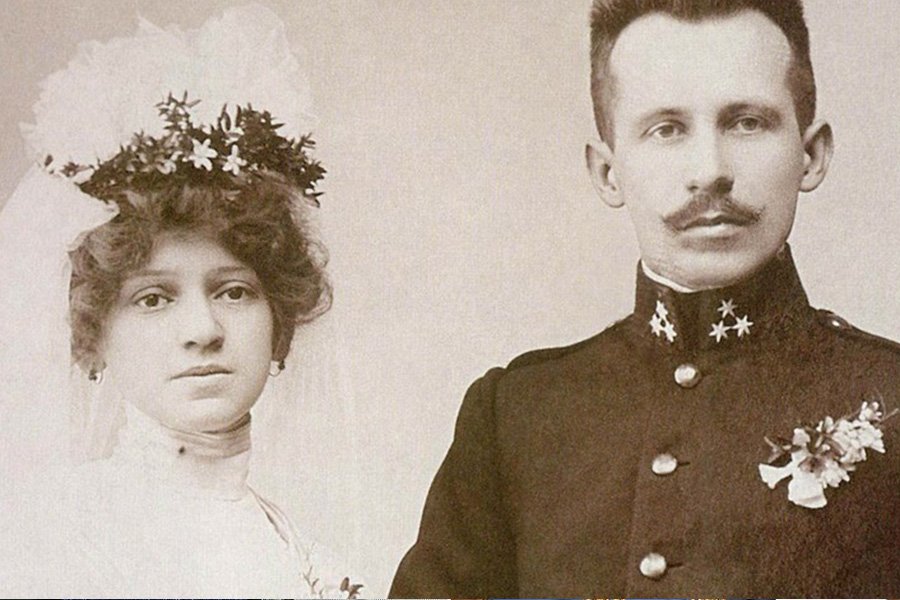
Emilia’s life changed at 22 in 1906. She married Karol Wojtyła Sr. on February 10 at Kraków’s military church. He was a disciplined and devout Catholic Polish army lieutenant born in 1879. They shared respect, family, and spirituality in their marriage. Daily prayers instilled principles that would last generations.
After Karol Sr.’s military assignment, the couple moved to Wadowice in 1913. His pay supported their small home, with Emilia sewing to augment. Arriving children marked pleasures and sorrows. Edmund arrived on August 27, 1906. He became a promising doctor until he acquired scarlet fever from a patient aged 26 in 1932. The family’s tranquil life was shattered by his death.
On July 7, 1916, Olga arrived, but she was brief. She lived 16 hours, a spark extinguished too soon. This tragedy is simply recorded in parish documents. Born on May 18, 1920, Karol Józef Wojtyła would later become Pope John Paul II. His arrival followed a 1919-1920 high-risk pregnancy. Emilia resisted abortion despite doctors’ advice owing to her poor health, trusting God. Like a lighthouse enduring seas, this brave gesture reflected a mother’s unwavering love.
Faith fueled family relationships. After Emilia’s death, Karol Sr. took 9-year-old Karol Jr. to Kalwaria Zebrzydowska shrine and entrusted him to Mary. “From today on, she will be your mother,” stated. This Marian devotion Emilia established in her son blossomed. The family stressed religious education, with daily prayers and shrine visits.
Challenges and Daily Life
Her health was always a concern. Her chronic heart and kidney troubles killed her aged 45 on April 13, 1929. Her death and burial in Wadowice left a familial vacuum. But her effect lasted. Later, Karol Jr. acknowledged her spiritual significance in his writings, such as Gift and Mystery.
Her teaching career ended when she married and started a family. She has no impressive accomplishments or financial empires. The family lived cheaply on 500–1000 zlotys per month from military pay, although specific statistics are unknown. Her legacy was nurturing, the gentle art of faith-filled souls.
Her neighbors remembered her sorrow, possibly from losses. Helena and Olga Marianna were caregivers in a large family where death was often. Feliks Rudolf, a sibling, certainly supported, but his life is forgotten.
Ethnic roots layered Mostly Polish with possible distant Lithuanian roots, unverified allegations of other heritages were unimportant. In Poland’s chaotic interwar years, she was resilient and silent.
Timeline of Key Events
To capture the flow of her life, I’ve compiled this table. It highlights dates and milestones, painting a chronological picture.
| Year | Event |
|---|---|
| 1884 | Born March 26 in Biała (or tied to Kraków). Fifth of 13 children to Feliks Kaczorowski and Anna Maria Scholz. |
| 1897 | Mother Anna Maria dies at 44; Emilia, 13, helps raise siblings amid losses. |
| Late 1890s-Early 1900s | Attends Catholic school by Sisters of Divine Love; trains and works as schoolteacher in Kraków. |
| 1906 | Marries Karol Wojtyła Sr. on February 10; son Edmund born August 27. |
| 1913 | Family relocates to Wadowice due to husband’s military duties. |
| 1916 | Daughter Olga born July 7, dies within 16 hours. |
| 1919-1920 | High-risk pregnancy with Karol Jr.; refuses abortion; gives birth May 18. |
| 1929 | Dies April 13 from heart and kidney failure at age 45 in Wadowice. |
| Post-1929 | Legacy lives through son Karol Jr., who becomes Pope John Paul II in 1978; beatification process for parents opens in 2020. |
This timeline underscores the brevity of her 45 years, packed with 3 children, multiple moves, and enduring faith.
Recent Reflections and Legacy
In recent years, from 2023 to 2026, Emilia’s story has resurfaced in discussions of faith and family. Her beatification process, opened in 2020 alongside Karol Sr.’s, explores potential miracles, drawing attention to her pregnancy choice. Catholic narratives hail it as inspirational, a stand for life amid peril.
Social mentions in 2025, like viral posts with over 2,000 engagements, portray her as a pro-life icon. News in 2024 emphasized her dilemma, refusing medical advice in 1920. By 2026, commemorations of her son’s papacy keep her memory alive, blending personal sacrifice with broader spiritual themes.
Her family, marked by 13 siblings and her own 3 children, reflects a web of connections frayed by time but strengthened by shared devotion. Edmund’s medical career, cut short at 26, showed promise; Olga’s brief life, a poignant reminder of fragility; Karol Jr.’s rise, a testament to her nurturing.
FAQ
Who was Emilia Kaczorowska’s immediate family?
Emilia’s parents were Feliks Paweł Kaczorowski, a saddler born in 1849 and died in 1908, and Anna Maria Scholz, born in 1853 and passed in 1897. She had 12 siblings, including known ones like Olga Marianna, Helena (Augustyna), and Feliks Rudolf. Her husband was Karol Wojtyła Sr., married in 1906, and their children were Edmund (1906-1932), Olga (1916, died shortly after), and Karol Józef (1920-2005), later Pope John Paul II.
What was Emilia’s profession and how did it change over time?
She worked as a schoolteacher in her early 20s, educating children in Kraków. After marrying in 1906, she focused on homemaking and occasional tailoring for income, aligning with era norms. No major financial details survive, but the family relied on her husband’s military salary of modest amounts.
How did health issues impact Emilia’s life?
Chronic heart and kidney problems defined her later years, culminating in death at 45 on April 13, 1929. During her 1920 pregnancy, risks were high, yet she proceeded, giving birth to Karol Jr. This choice highlighted her faith-driven resilience.
What ethnic background did Emilia have?
Primarily Polish, with some accounts noting distant Lithuanian roots through family lines. Fringe claims of other heritages exist but lack substantiation, emphasizing her Catholic Polish identity.
How has Emilia’s story been remembered recently?
From 2020 onward, her beatification process investigates miracles. In 2024-2026, media and social posts, some with thousands of likes, focus on her pro-life stance and family holiness, tying into her son’s papal legacy.